

Sportradar is the sports technology company that sits at the heart of the action in the sports industry.
More betting operators, more brands, more broadcasters and tech platforms, more teams, leagues and federations – and more fans – rely on Sportradar innovations and data to make sense of sport.
It delivers to their needs by harnessing the power of artificial intelligence to process the deep data it collects, in real time, through proprietary technologies like computer vision.
To do so it relies on the vast quantity of dedicated sports data it holds. This has been gathered across the two decades and more of its operation and is the essential foundation to training the AI models it develops.
With these models, its betting, broadcast and coaching applications can also now benefit from the support of generative AI. This in turn makes the narratives that participants and fans in sport receive from Sportradar feel altogether more natural.
The conversational insights these applications create now better inform the sports ecosystem about the way sports events are being played, diving much deeper than the scoreboard alone.
Here, Behshad Behzadi, Sportradar’s Chief AI, Technology and Product Officer, explains what this generative-AI future holds for the sports industry and the fans who sustain it.
If a year is a long time in sports, it is a lifetime in the world of artificial intelligence (AI).
We have moved from rudimentary machine learning, through virtual assistants, to neural networks and the large language models and Generative AI (GenAI) applications of today. Now, each passing day seems to bring new developments.
It has all been delivered at such a breakneck pace that it can be hard to keep up – even for someone like me who has been working in AI for 15 years.
But organisations will have to try, because the prize of being an AI-first, AI-native organisation is immense speed and scale. And these will soon become must-haves in all industries and sectors.
In sport, fans will know straight away who is keeping up and who is falling behind. They will become so used to having personalised content delivery – an AI commentator that cheers when their team scores and boos the opposition, perhaps – that when those choices are unavailable it will become frustrating.
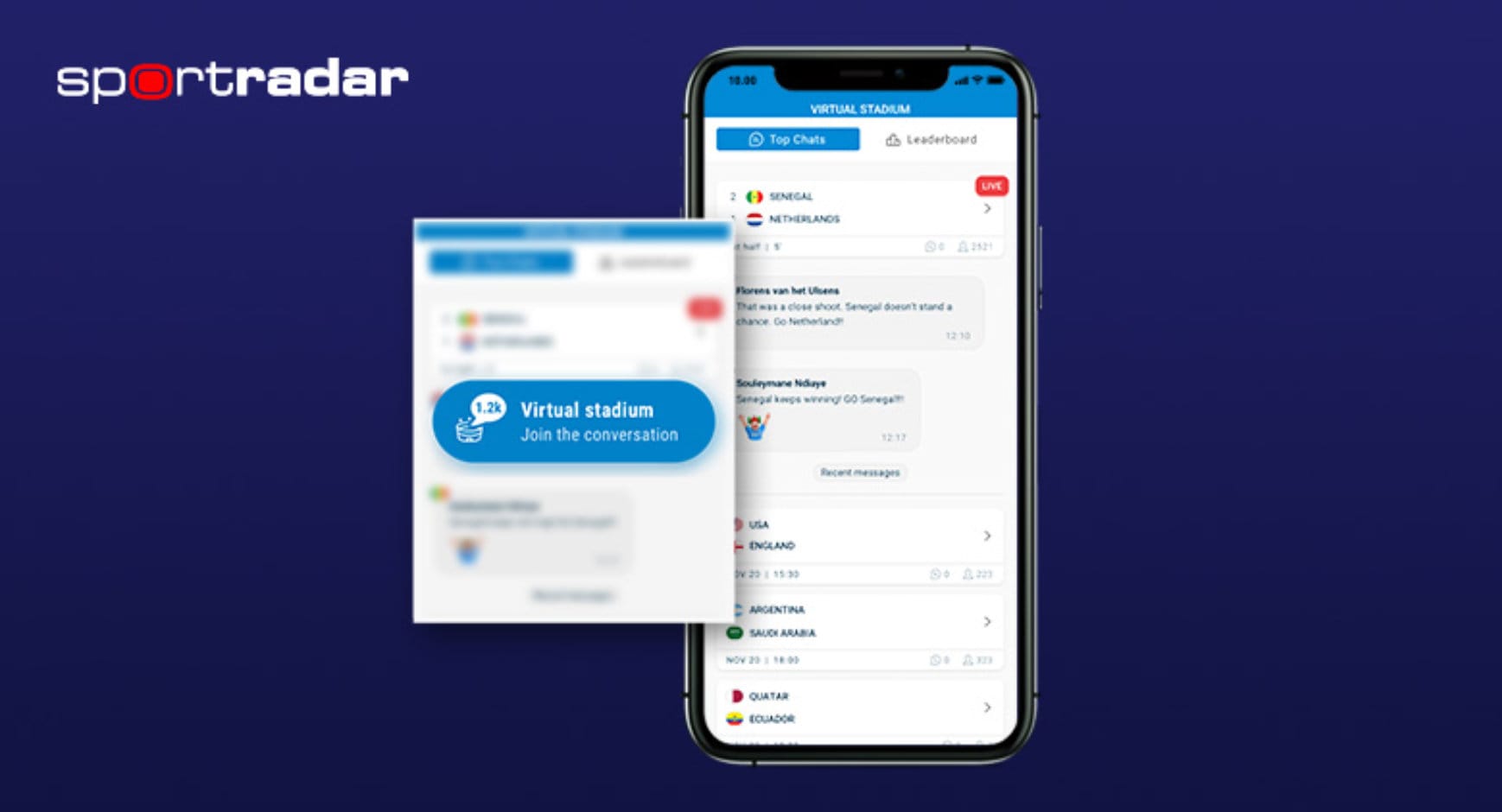
It is important to know what those choices are, because new services are being rolled out fast. A key element, already familiar to general users of virtual assistants, will be conversational experiences
Sports fans have grown used to having to find their own data and insights by searching through online resources and using keywords to get what they need. It can be a difficult and time-consuming process.
But GenAI is now taking that pain away, offering fans the opportunity to hold natural-language conversations that will get them the answers they need.
A good example of this is the Bet Concierge product we have in development. If I want to bet on Lamine Yamal scoring in both halves as Barcelona beat their opposition by three clear goals, I currently have to search across multiple pages on a betting website and create my accumulator (parlay) bet.
But with Bet Concierge, I can simply ask it to create that bet for me, and it is delivered automatically. Developments in conversational experiences like these do not only apply in the betting markets.
They can help coaches understand deep data in action – in real time – to make instant, informed decisions. And they are going to make arguments between friends about who scored more runs in cricket, tries in rugby or goals in football a lot quicker and easier to settle.
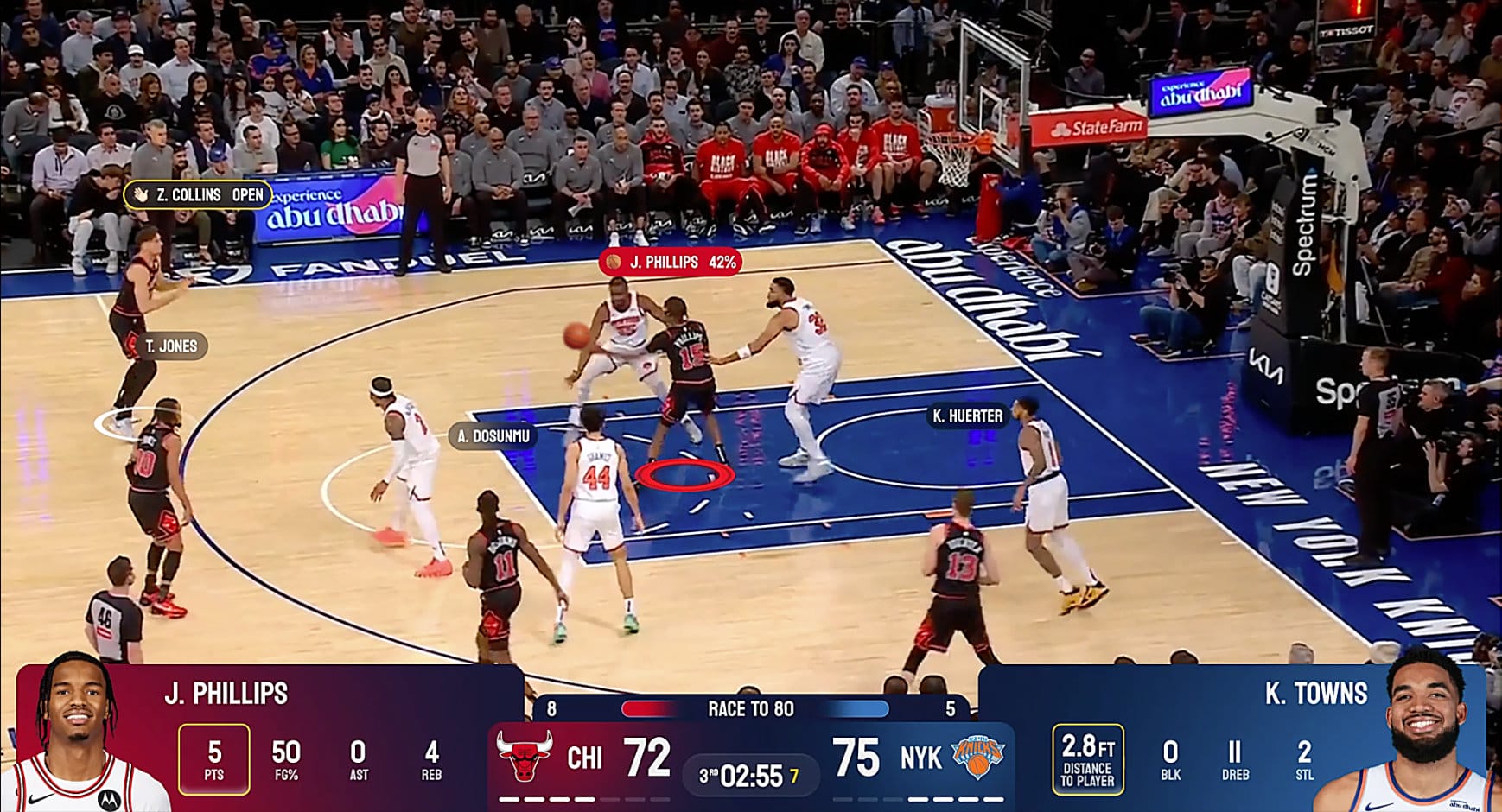

Ultra-rapid, real-time delivery is in fact another key element of the new GenAI paradigm, because that is the way to generate instant insights and storytelling, at scale.
This is why at Sportradar we have made big investments to ensure that the events inside a stadium are transmitted in a second – not 10 seconds later. This way, the information, insights and numbers reach betting websites, broadcasters and fans almost instantly. This speed of delivery will become another aspect that fans will come to expect in the GenAI era.
That is because having a low-latency feed is essential to delivering so much of the content GenAI can bring. For instance, we can take advantage of low-latency, high-fidelity feeds to extract data using computer vision (CV).
But it is also about getting products out there fast and getting feedback on them. You can do this with GenAI because the intrinsic development costs are lower, so it means the price of failure is relatively trivial – but with the scalability it brings, the rewards for success are enormous.
GenAI has brought costs down too in content production and creation. This opens the door to more varied formats, tailored to individuals. It will also enable creators to produce better-informed content for their audiences.
But there remain challenges ahead too. One issue is simply the mindset of both the general public and the decision-makers in organisations.
We are only two years into this GenAI revolution. Although we are all becoming more accustomed to using AI every day, which makes us all more comfortable with it, there are barriers that people perceive, affecting the trust they place in it.
Some of these are reasonable. AI is only as good as the data you feed into it, so questions of quality and hallucinations are real. A broadcaster cannot put out accurate data 95% of the time – it has to be 100% reliable.
Which is why the depth and breadth of Sportradar’s 20-plus-year-old data history is so crucial to our success. And it is also why we are investing in things like computer vision to enhance the accuracy and speed of the data we produce. Where people increasingly see these positive effects, it will improve adoption and overcome the sense that some people still have that AI is all hype.
Because one thing is for sure: AI is here to stay. It is just that it will not look like what we have today.
