

Personar is a London-based AI sports technology company specialising in audio analysis and real-time decision intelligence for professional sports globally.
The company’s flagship products, TrackSwift and CoachScribe, leverage advanced speech-to-text and AI categorisation to deliver actionable insights for elite sports organisations. With its development hub in Budapest and global teams spanning Australia, Singapore, Europe, and the US, Personar powers 24/7 operations for the world’s most demanding sports events.
For decades, fans have watched pivotal calls unfold with one burning question echoing through stadiums and living rooms: why? Video replays showed us what happened—the contact, the line crossing, the fractional timing—but they never revealed the reasoning behind the referee’s whistle. We could see the incident from twelve different angles, but the decision-making process remained locked inside an impenetrable black box. That fundamental disconnect has fueled controversy, eroded trust, and left spectators feeling like outsiders to the very games they love.
The world is changing fast. Modern sports fans don’t just want to witness spectacular athleticism; they demand to understand the framework governing competition. They want transparency. They want accountability. Most importantly, they want to know not just what was called, but why it was called. Now, artificial intelligence is finally cracking open sport’s last sealed vault—real-time referee communications—and the implications will reshape how we experience sports forever.

The Transparency Gap That Built Distrust
The introduction of video technology promised to settle debates and eliminate controversy. VAR in football, TMO in rugby, DRS in cricket—each innovation was heralded as the solution to officiating disputes. Yet somehow, controversy persisted. Fans watched referees huddle around monitors, saw decisions reversed or upheld, but remained completely disconnected from the reasoning process. The officials had information. The athletes sometimes received explanations. But fans? They were left to speculate, argue, and increasingly, to distrust.
This gap became particularly acute during crucial moments. When a penalty decides a championship, when a time penalty costs a Grand Prix victory, when a yellow card changes the trajectory of a World Cup match—these are the moments when fans most desperately need to understand the why behind the decision. Instead, they’ve historically received only the outcome, delivered without context or justification, breeding frustration across every sport.
The problem wasn’t the technology itself—it was that transparency stopped halfway. We could all see the incident, but only officials could hear the discussion that mattered most.
Audio: The Final Frontier
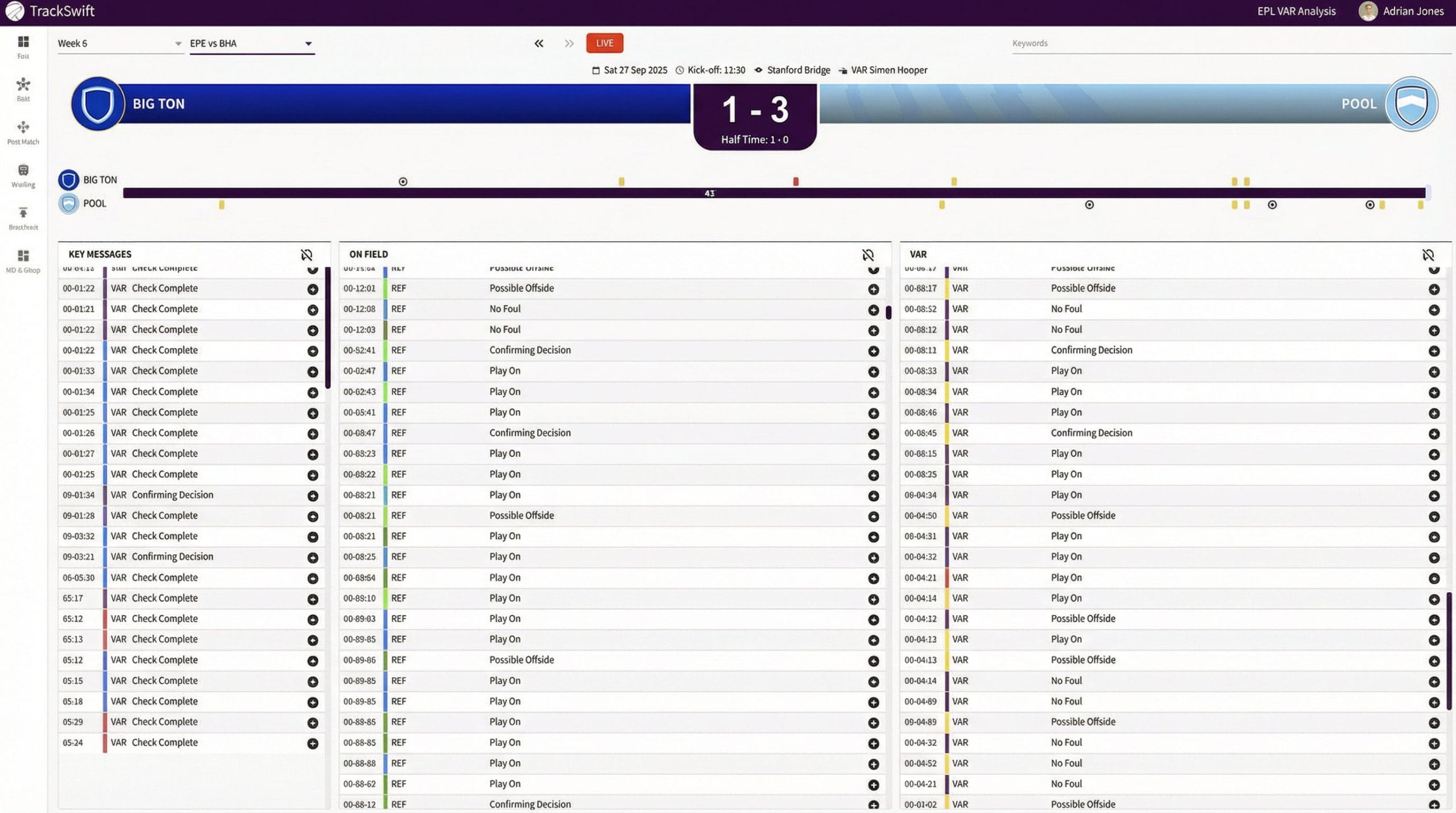
Imagine watching a tense Formula One race when Max Verstappen receives a five-second penalty. Instead of commentators speculating about the reasoning, you hear race control explaining directly to the driver: “Car 1, you forced Car 44 off track at Turn 4, advantage gained, five-second penalty.” Or picture a controversial VAR decision in a Premier League match where fans hear the official explain: “Clear contact with the leg before the ball, clear and obvious error, recommending on-field review.”
This isn’t science fiction. This is the transparency revolution arriving in real-time.
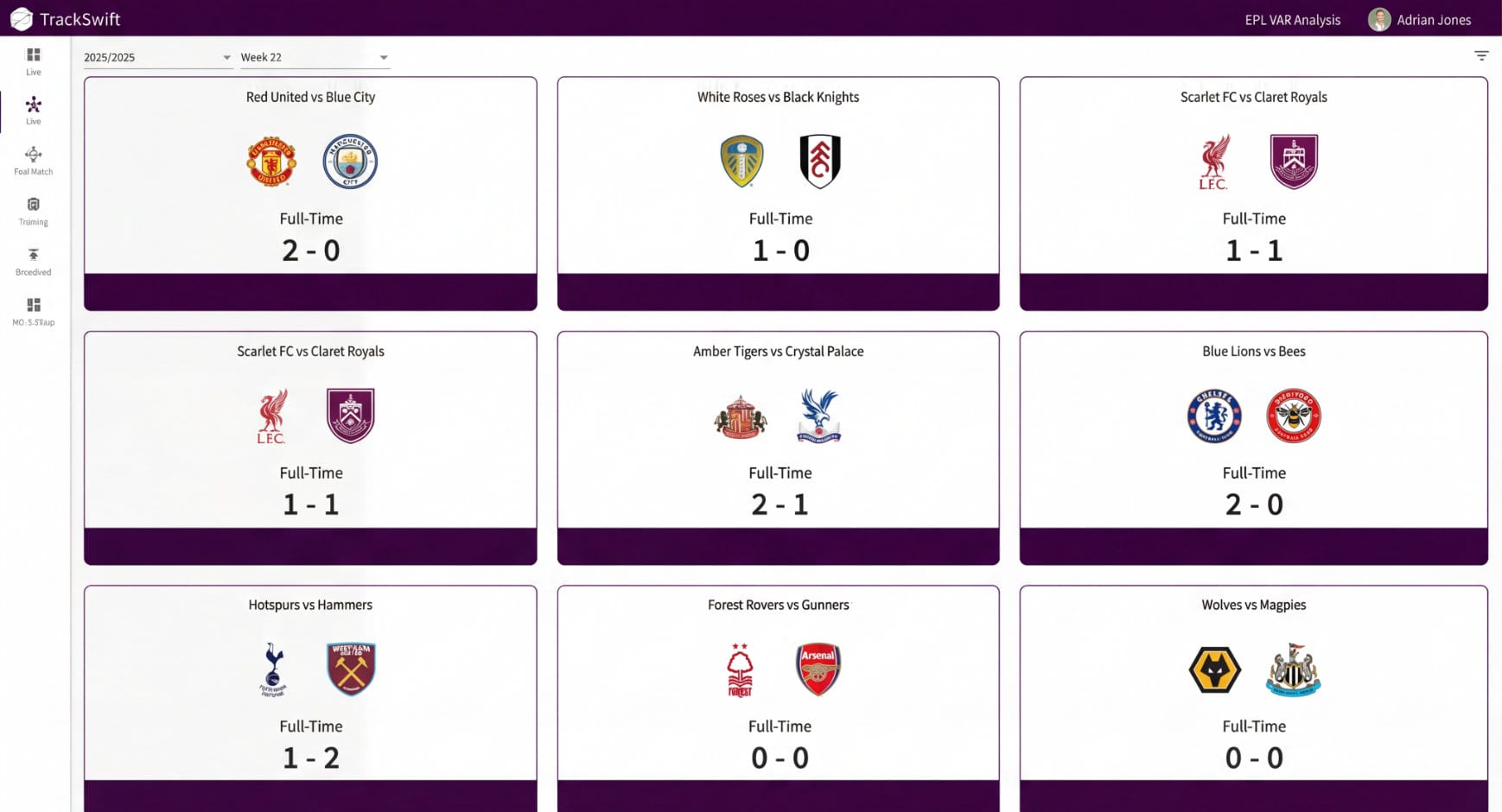
AI-powered technologies like Personar’s TrackSwift are now processing thousands of communications instantly, extracting the crucial decision-making conversations from the noise of race weekend or match day chatter. Simultaneously, broadcast innovations are bringing referee audio directly to fans, creating an unprecedented window into officiating processes. Formula One has already begun experimenting with broadcasting team radio and race control communications. Rugby has pioneered referee microphones that let spectators follow the decision-making process. Football is exploring similar innovations with VAR communications.
The technology finally exists to close the transparency gap completely, giving fans access to the same explanations that athletes receive during critical moments. AI doesn’t just record these conversations—it intelligently identifies which communications matter, processes them in real-time, and makes them accessible exactly when fans need them most.

From Opacity to Understanding: The Power Shift
This isn’t incremental improvement. This represents a fundamental power shift in the relationship between sports, officials, and fans. When spectators access identical information as athletes, something remarkable happens: controversy transforms from blind frustration into informed debate.
Consider how this changes the fan experience. Previously, a questionable penalty decision triggered social media outrage based on speculation and incomplete information. Now, fans can hear exactly what the referee heard, understand the specific regulation cited, and follow the reasoning process. They might still disagree with the decision, but disagreement based on understanding is entirely different from anger based on opacity.
This transparency revolution extends across every major sport. In motorsports, where split-second decisions about track limits, unsafe releases, or dangerous driving can swing championships, fans will finally understand the precise reasoning behind penalties. In football, where VAR decisions have become lightning rods for controversy, transparent audio will reveal whether officials followed protocol correctly. In rugby, where the referee’s authority is paramount, broadcasting decision-making processes will demonstrate the rigor behind crucial calls.
Technologies like TrackSwift enable this transformation by solving the overwhelming complexity problem. Major sporting events generate thousands of communications—team radios, official discussions, operational chatter. AI processes this tsunami of audio data, identifies the decision-critical conversations, and surfaces them at precisely the right moment for broadcast teams and fans. Without this intelligent filtering, transparency would drown in noise.
From Opacity to Understanding: The Power Shift
This isn’t incremental improvement. This represents a fundamental power shift in the relationship between sports, officials, and fans. When spectators access identical information as athletes, something remarkable happens: controversy transforms from blind frustration into informed debate.
Consider how this changes the fan experience. Previously, a questionable penalty decision triggered social media outrage based on speculation and incomplete information. Now, fans can hear exactly what the referee heard, understand the specific regulation cited, and follow the reasoning process. They might still disagree with the decision, but disagreement based on understanding is entirely different from anger based on opacity.
This transparency revolution extends across every major sport. In motorsports, where split-second decisions about track limits, unsafe releases, or dangerous driving can swing championships, fans will finally understand the precise reasoning behind penalties. In football, where VAR decisions have become lightning rods for controversy, transparent audio will reveal whether officials followed protocol correctly. In rugby, where the referee’s authority is paramount, broadcasting decision-making processes will demonstrate the rigor behind crucial calls.

Designing Transparency Into Sport’s Future
The transparency revolution isn’t about exposing officials or creating controversy – it’s about designing trust into the fundamental structure of sports. When AI unlocks real-time communications, when broadcasts bring referee reasoning directly to fans, when spectators finally understand the why behind crucial decisions, something profound changes.
Sports become more watchable, more understandable, more trustworthy. Fans transform from frustrated outsiders to informed participants. Officials gain appreciation for managing impossible complexity in real-time. And the game itself becomes richer, deeper, more engaging.
The final frontier of sports transparency is opening before us. The question isn’t whether this revolution will happen – the technology is already here, the demand is undeniable, and forward-thinking organizations are leading the charge. The only question is which sports will embrace transparency first, and which will be forced to follow once fans experience what genuine understanding feels like.
The answer will define sports for the next generation.