Happy Holidays from The STA Group

The entire team at The STA Group sends our warmest wishes for a joyful festive season.

Thank you for being an integral part of our community this year. Whether we’ve worked together, spoken this year, or you’ve simply followed our work, we really appreciate the support.

Here’s to an inspiring and innovative 2026 – we’re looking forward to the brilliant ideas and transformative innovations the coming year will bring.

P.S. The year might be wrapping up, but not everything is closing. The Smarter Sports Awards are still accepting entries – one last move in 2025 could be your best yet… Enter Here

Warmest wishes,


The STA Group Team

AI Can Only Model Sports Big Moments, It Cannot Make Them 

Like an unsupervised artistic genie, AI can conjure almost anything a lazy creative might request: a snuff film script, a punk love song, even a murder mystery in the style of Dua Lipa. It is exactly the kind of mischief that sparks writers strikes and keeps musician lobby groups busy. We are also in an era where cultural icons must correct nonsense generated by people with too much time and too much technology. Who could have imagined Paul McCartney needing to confirm he did not, in fact, visit Phil Collins’ hospital bed with a guitar over his shoulder. 

Yet amid all this manufactured noise, sport feels oddly insulated. It is now the last mass market source of unrepeatable, ungenerated, unedited human drama — and that gives it a rare commercial edge. Sport has always traded in emotional extremes and, however wealthy it becomes, its true currency is passion. Music is the closest comparison, but AI has already seeped into that world. ABBA Voyage is both wonderful and impressive, but it prompts an obvious question: what happens when technology starts shaping the moments we treat as authentic. 

This matters culturally and commercially. Sport is marching toward a $600bn valuation, driven by a generation that prizes authenticity above almost anything else. They want something unfiltered and uninvented, and sport obliges every week. That accessibility, at scale, is something no other cultural arena can offer. Brands, broadcasters and rights holders understand this instinctively: they are not buying reach alone; they are buying the one thing AI cannot convincingly fake. 

The long-term question is whether AI remains a modeller of big moments or becomes a creator of them. If synthetic sport – generated contests, avatar leagues, algorithmic outcomes – ever feels as compelling as the real thing, authenticity stops being a resource only sport controls. 

The opportunity is clear: double down on the qualities that make sport irreplaceable while experimenting with the technologies that challenge it. The risk is assuming immunity in a world that is changing fast. Sport’s authenticity is its greatest advantage. That advantage is only secure if the industry treats it as something to be protected, not presumed. 

Dressing Athletes for Success 

Some things you write stay box fresh for years; others have a shelf life. 

Immediately after the pandemic, our Sports Technology Annual Review included a chapter on sports apparel noting that kit had slipped behind the wider sports tech curve. Designers were trying to collaborate through a disrupted supply chain, the right materials were available, but the uncomfortable truth was that fashion was driving sales and few brands were thinking seriously about a tech led arms race. 

How times change. 

Last summer Nike and adidas went toe to toe in a contest defined almost entirely by technology. The smart kit genie is not just out of the bottle; it is already sprinting for the podium. 

Why? Because sportswear without tech is just fashion, and fashion alone no longer shifts stock. 

Track and field may be wrestling with formats and visibility, but elite athletes command serious money. Glimpse a contract and you will see how exacting a sponsor’s performance expectations are. When kit becomes a variable in the result, looking good is marketing; winning is the business model. 

Which is why the race for credible technology in footwear and apparel is so open. In house labs, scientists and designers can only push so far. Proposed EU sustainability legislation will be another significant hurdle. If sports brands are going to shape the performance frontier rather than simply dress it, they will need deeper collaborations, stronger external intelligence and a great deal of fresh thinking. 

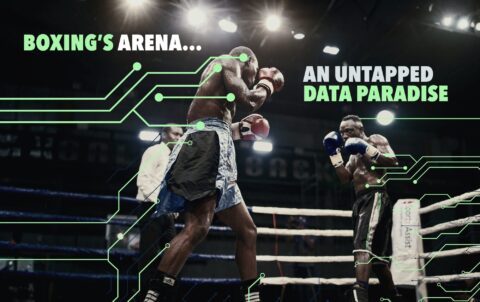
Boxing’s Arena: An Untapped Data Paradise 

For anyone who witnessed the bout between Jeamie TKV and Frazer Clarke, a split decision after twelve rounds where every round looked like the twelfth, you might have been struck by just how bouncy the ropes were. Seeing two big lads land on them looked most WWE than the BBBofC.  

It was a sharp reminder of something the sport rarely talks about: the ring is not just a stage, it is part of the performance. The legal size can range from 16 to 24 feet, and that range genuinely changes the rhythm of a fight. Give a technical mover more room and the theory is that footwork is cleaner, there are more reset points, and essentially, more chess. Bring the dimensions in and you up the ante on pressure, pace, and heavier exchanges. Rope tension adds another variable, and a surprisingly creative one; looser ropes encourage evasive work and counterpunching, while firmer ones promote centre-ring control. These differences do not distort boxing. They reveal fresh versions of it. 

This is good, exciting stuff – and something the sport has yet to unlock fully. Basic instrumentation, such as rope tension gauges, corner stiffness profiles, simple accelerometers tracking rebound, could give promoters, commissions and broadcasters an even clearer understanding of how a ring will shape a bout. Doubtless those well-versed in the sport have the experience to judge it but for the rest of us, it could add a fascinating dimension to the sport, including the sense of why a fight unfolds the way it does. None of this requires intrusive technology. It simply applies the same curiosity other sports use to understand their playing environments. 

The rash of contests looming between creators and pro fighters already show that the curiosity is there and If someone care to weaponize the intelligence rather than overlooking it, the spectacle itself will claim more fans, not least of all the bookies.