


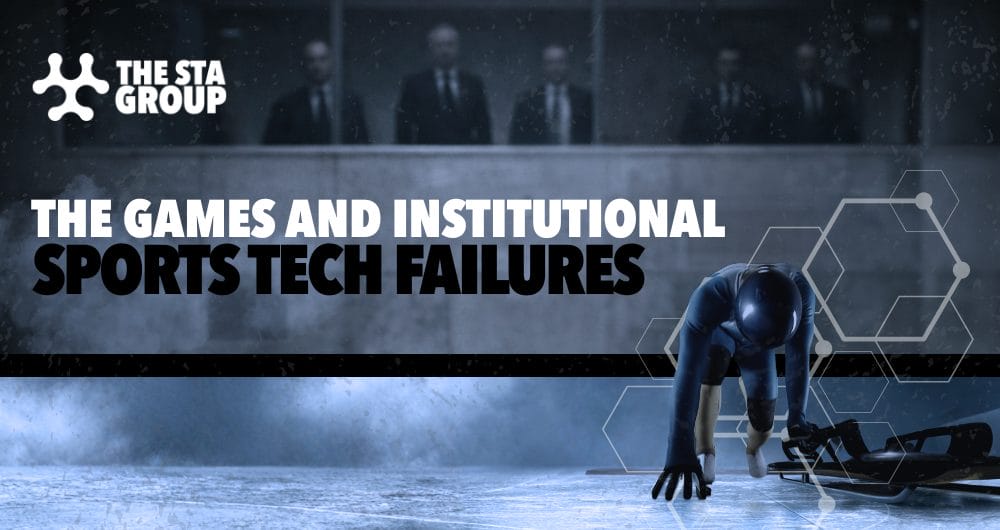
Tech-doping is a perfectly reasonable thing for a governing body to legislate against. Tech-led safety is not.
The recent brouhaha around Team GBs skeleton helmet was a shining example of the institutional failure where the upper echelons of a sport failed to keep pace.
The British Bobsleigh and Skeleton Association did exactly what the system asks of elite sport: invest in technology, collaborate with adjacent industries, and push marginal gains legally. The BBSA were supported by UK Sport funding, followed due process, submitted designs, tested rigorously, and still fell afoul of the International Bobsleigh and Skeleton Federation.
Instead of being focussed on preparing their athletes, they found themselves facing CAS.
The decision by the IBSK to block the helmet based on shape reinforces a long running tension in sport. Rules are often written to control risk and fairness, but they frequently lag engineering reality. In this case, dangerously so as the BBSK believes the helmet has tangible safety benefits. Which governing body wouldn’t want its athletes to compete as safely as possible?
If the IBSK wanted to block the helmet based on aesthetic or geometric grounds, then they are clearly saying that pretty beats safe.
Taking a wider view, when medal favourites are affected by such decisions, there are wider implications such as performance, funding, brand and fairness. When governing bodies block late-stage innovation, the downstream cost is borne by athletes, teams, sponsors, funders and fans.
Technology is not a side show in elite sport. It increasingly shapes outcomes (and must do so fairly), safety, funding efficiency, and competitive balance. In this case the issue caused controversy but there are other fallouts when tech, governance and performance operate in siloes.
Sport wants innovation but those at the top often struggle to absorb it. Until governance evolves at the same pace as engineering, stories like this will keep repeating and medals, safety gains, and public trust will remain collateral damage.
1 Comment
Rebecca, you are right that International Federations (typically the regulator for technical rules for a sport) often appear slow to adopt technology innovation around equipment. However, rules have to be based on evidence that can be scrutinised and ultimately peer reviewed and often assessed by expert committees, this all takes time. I know only too well having been Chef de Mission for Team GB, that it can be frustrating when a piece of technology is not accepted ahead of competition, particularly when technology innovation in sport is something that the UK excel at, but the rules are the rules. I’ve also sat on the other side of the fence leading an International Federation and they are there to regulate sport and take tough decisions on these matters, otherwise sport would just not be fair.
The important point that you highlight is that many of these innovations can actually make the sport safer, but the reality is that many International Federations are not investing enough of their own resources into safety innovation research. For example, common standards for technologies such as helmets are often not fit for purpose for a specific sport and the associated risks. For example, helmet standards that a sport chooses to rely upon, can often take no account of the need to reduce rotational acceleration of the head and only consider linear impact.
This is certainly a key focus of our charitable work at Podium Analytics and the Podium Institute of Sport and Technology at the University of Oxford and I’m pleased to say that there are some enlightened International Federations, National Governing Bodies and Professional Clubs that we’re working with to address these issues.