UEFA, WWE, Bleachr, F1 and STATsports Take Home Trophies
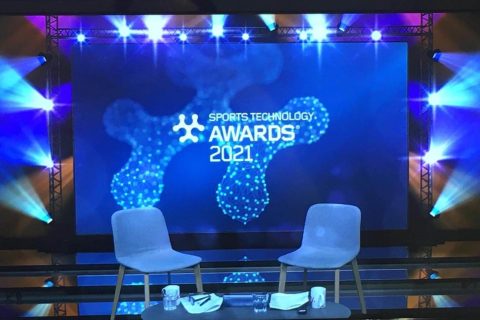
London: on 6 May the winners of the coveted Sports Technology Awards’ trophies were revealed.
In a virtual event, attended by leading sports brands including the PGA, Chelsea FC, Star Sports and Vodafone, the Awards, which took place virtually, celebrates tech-led innovations in all sports and attracts entries from over 30 countries and 50 sports.
The winners
Best Broadcast Technology, WSC Sports: Creating Automagical OTT Experiences
Best Sports Participation Technology, BRS Golf by GolfNow
Best Elite Performance Technology, NV Play Cricket | Game Changing Software
Sports Technology Partnership of the Year, PT SportSuite, Bristol Sport
Best Digital Technology, The Bleachr App feat CrowdVIEW Live
Best Sports Action Analytics, Coursetrack
Best Injury Prevention or Rehabilitation Technology, STATSports Sonra Watch
Sustainability in Sport, Galvin Green
Best Technology for Good, Pitchero, Track and Trace
Best Fan Engagement Technology, Sport Buff Next Generation Fan Engagement
Best Use of Esports by a Sports Brand, Motorsport Games, 24 Hours of Le Mans Virtual
Equipment or Wearable of The Year, SunGod, Vulcans™
App of the Year, Chelsea FC, The 5th Stand
Best Operations, Commerce and Security Technology, Ticketmaster Sport COVID-19 Response
Best Sports Business Analytics, F1 and Flamingo, AI & Sponsorship in F1: Finding the Marginal Gains
Best Use of Technology by a Brand, WWE ThunderDome
Best Use of Technology by a Broadcaster, Star India, IPL 2020
Capgemini Sports Technology Innovation of the Year, Hawk-Eye Live at the US Open 2020
Governing Body of the Year, UEFA
Stars in attendance included racing driver, Mark Webber, Double Olympic Champion Triathlete, Alistair Brownlee, South African International and Rugby World Cup Winner, Bryan Habana, former International Footballer turned tech entrepreneur, Louis Saha and multi-Olympic champion sailor, Sir Ben Ainslie, who announced a new partnership between his charitable initiative STEM Crew, part of the 1851 Trust, and The STA Group, owners of the awards.
Sir Ben’s charity works to inspire more school children to study STEM subjects using sailing to engage with pupils. The purpose of the partnership is to motivate the wider sports industry, especially its tech visionaries, to support STEM Crew’s work – potentially finding their colleagues of tomorrow.
Many of this year’s award-winners were initiatives that were created to tackle challenges presented by the global pandemic, most notably the work of Ticketmaster Sport, Star Sports India, WWE and F1. Another key trend amongst entries were how the number creating environmentally sustainable work in the sector.
Rebecca Hopkins, CEO of The STA Group, said ‘We’ve experienced unprecedented times but Covid has made sport use technology to solve new problems in innovative ways. As a result, the calibre of entries has been truly staggering in vision and creativity. Our judges love seeing the cutting edge of sport but this year has been like no other; the was the industry has responded is a source of great pride to all concerned. Indisputably, technology has put sport in a great place to do exciting things both now and when the world eventually returns to normal.’
For more information about the Sports Technology Awards and the STA Group visit www.sportstechgroup.org
More information about the Awards can be found at www.sportstechnologyawards.com
The STA Group is delighted to announce that Sir Ben Ainslie, one of the most successful sailors in the sport’s history, will be our keynote Q&A guest at the 2021 Sports Technology Awards ceremony.
Ben has won medals at five consecutive Olympics from 1996 onwards, including gold at the four Games held between 2000 and 2012, and is one of only two Britons to ever win the America’s Cup, sailing for the USA.
The next challenge will be to lead INEOS TEAM UK to its third consecutive British America’s Cup challenge, in the bid to win sports oldest international trophy.
Ben acknowledges the fundamental role technology has played throughout his career, though never more so than in his latest America’s Cup campaign.
In a live Q&A, Ben will share his competition stories as well as his experience, insights and opinions on how technology is shaping modern sport from the vantage point of an athlete, skipper, team principal and investor.
This will be a fascinating session for anyone with a passion for sports and the important role technology plays within it.
Thanks to our friends at Reactoo, the 2021 Sports Technology Awards ceremony will be the most tech-forward, virtual awards event in sport. Book your virtual table and enjoy a ground-breaking, unique and innovative experience that promises to be highly entertaining AND great marketing for your business https://bit.ly/3f1EKIr
‘Covid Might Have Forced Sports’ Hand to Innovate, but Thanks to Technology,
the Industry’s Response has been Magnificent’
The challenges of the past year have been far reaching and the sports industry has certainly felt the force of the pandemic. With this backdrop, we couldn’t be prouder to reveal this year’s Sports Technology Awards shortlist. It features 117 brands, 30 sports, 19 sports bodies, 10 broadcasters and nine tournaments, along with a myriad of technology brands of all sizes. Moreover, it is an overwhelming testament to the underlying dynamism of our sector that so many organizations have responded to the crisis with visionary innovation.
As one of our judges observed ‘covid might have forced the industry’s hand to innovate, but …the industry’s response has been magnificent’.
The 2021 shortlist is
App of the Year
Bleachr
Chelsea FC
LiveScore
Mile Positioning Solutions
SportMember
Stadion and Paris St Germain
Best Broadcast Technology
Dejero
NV Play
Spiideo
StreamAMG
Timeline Television
WSC Sports
Best Digital Technology
Bleachr
CSG
NV Play
Sport Buff
Sportskred
Wildmoka
Best Elite Performance Technology
NV Play
Platysens
Spiideo
Sports Data Labs
Stats Perform
STATSports
Best Fan Engagement Technology
ESL UK: WeavrConsortium
Fanbase
Filmily and Wasserman
Scorz
Sponix Tech
Sport Buff
Best Injury Prevention or Rehabilitation Technology
IMPACT Gumshields
NuroKor
Premedit
STATSports
VKTRY Gear
Best Operations, Commerce and Event Management Technology
Spotlight Sports Group
SwipeStation
Synamedia
Table Tennis England
Tappit
Ticketmaster Sport
Best Sports Action Analytics
Arccos Golf
Coursetrack
Decathlon
IBM
Infosys
Metrica Sports
Best Sports Business Analytics
Deltatre and DFL
Formula 1 and Flamingo
Goodform
Nielsen Sports
Videocites
Best Sports Participation Technology
Federation of Sport at Altitude
GolfNow
Inrange Golf
PlayerData
World Academy of Sport and International Tennis Federation
WWE
Best Technology for Good
Invizion
Landmrk
Pitchero
PT SportSuite and Bristol Sport Foundation
Singular.live
Skoda UK
VictoryLab
Best Use of Esports by a Sports Brand
DFL and ESL
Extreme Networks
Formula 1
Motorsport Games
Sport Buff
Super League Triathlon
Best Use of Technology by a Brand
AELTC
Infront X and NASCAR
Infront X and PGA Tour
Stadion and Team GB
UEFA
Vodafone
WWE
Best Use of Technology by a Broadcaster
beIN MEDIA GROUP
Bleachr
BT with Sunset+Vine
ELEVEN
Star Sports India
Capgemini Sports Technology Innovation of the Year
Discovery and Eurosport
Hawk-Eye
Lumen
Motocaddy
Move-AI
OnePlan
Equipment or Wearable of The Year
I-Ball Laser Can
Motion Metrics
Playermaker
Sportcor
SunGod
Vald Performance
Governing Body of the Year
DFL
PGA European Tour
The AELTC
UEFA
WTA
WWE
Sports Technology Partnership of the Year
DFL and AWS
Engage Digital Partners
Infosys
PT SportSuite and Bristol Sport
WTA
WWE
Sustainability in Sport
Fanbase
Galvin Green
Paddle Logger
SunGod
Ticketmaster Sport
VITEC
The Group will be holding a virtual awards ceremony on May 6th but plans are in place to hold a celebration dinner at The Londoner, in the Autumn, once it is fully safe to network.
The brand data contained on this page is an external submission and has been taken in good faith; as such The STA Group is not responsible for the accuracy of the information. However, since The Group wishes only to convey correct intelligence, if you have any concerns over the copy presented above, please contact tanya@sportstechgroup.org
Event planning, design and management tool suite excites judges as
‘outstanding tech for sports post-covid era’
London: Today (16th February 2021), The STA Group announced that event management technology, OnePlan, had claimed the Startup of the Year accolade in its STA Startups Awards, securing $50,000 valued advisory from awards’ partners, Sightline Ventures.
OnePlan’s proposition combines all other mapping and visual planning tools, giving event planning teams a single, full plan and ‘shopping list’ of what an event space needs for a secure, safe experience. OnePlan is intuitive, easy-to-use and affordable, and simplifies and enhances every step of the planning process.
The award was made following a nine-way competitive live pitch, which featured the STA Startups category winners. The pitches were made to a judging panel including Hayley Parsons, serial entrepreneur and Founder and former CEO of Go Compare, Simon Muderack, Executive Chairman, Scarlets Rugby former CEO and President, Hansen Technologies, Martyn Ryan, Partner, Sightline Ventures, Rory Burghes, VP Accelerated Solutions Environment, Capgemini and Rebecca Hopkins, CEO, The STA Group.
Rebecca Hopkins explained why the judges chose OnePlan: ‘We were presented with propositions from nine diverse, exciting young companies which reflected key opportunities in the sports industry today. Every company showed an impressive level of sophistication and vision, which was demonstrated by the calibre of their communication, company structure and business thinking.’
‘Ultimately, we chose OnePlan as their proposition was a compelling mix of cutting-edge technology, product market fit, vision and potential. We could have happily worked with any one of the shortlisted businesses but live events, post-covid, have a clear need for OnePlan’s technology.’
For more information about the Startups or the STA Group, visit sportstechgroup.org
As the entry deadline for the 2021 Sports Technology Awards looms and you add the finishing touches on your forms, we are getting a lot of similar questions about what can make your submission stand out.
We are always delighted to help, so here’s a list of our top tips
1. Review the Category Criteria
This sounds obvious but by ensuring you truly understand what is being asked for you are not only likely to give stronger answers (and impress the judges more), you will be sure that you are entering the best award for your work
The entry form is very clear about what is being asked but if you aren’t sure – ask. We want to support you in securing the best chance of success
2. Mind your Language
We experience two issues here; we have entries from around the world and very occasionally things do get a little lost in translation. The other problem is when people cloud facts with hyperbole (avoid words like ‘tremendous’, ‘awesome’, ‘astonishing’ – if our judges feel it, they will say it!).
The word count on the form is low to help entries focus on key information, rather than non-fact embellishment. Finally, do your brand a favour and get a someone to review your form to ensure it is a clear, exciting read.
3. Better a Week Early than Half a Day Late
Entries really don’t take that long once you have the information. Set aside 30 minutes to review the entry form and understand what you need to prepare – including logos, support information from colleagues, payment method etc. Allow a week or two of email chasing and research to collate this, then, once you have gathered the information, set aside 90 mins to fill in the form. Doing this makes the process so much easier – and ensures you don’t incur late entry fees!
4. How to Manage Multiple Entries
Very reasonably, for many brands it is impossible to only choose one category. If you are going to submit work into several awards, we strongly recommend that you tailor your entry for each category.
There is a strong chance that judges will see your work in several categories – which is good – but we have noticed they tend to mark down if they see that no attempt has been made to relate the entry to the category; copy and paste is not your friend here!
5. The Harder the Facts, The Better the Entry
Our judges all sign NDAs before they can see any entry information so anything you share with them is protected. We realize that you might be cautious with anything very commercially sensitive but, as a rule, numbers are better than percentages, percentages are better than endorsements, endorsements are better than nothing!
6. Being Shortlisted IS a Win
Brands that don’t celebrate being on the shortlist are missing a commercial trick – not least of all as it is really, really hard to make the cut. Sometimes the difference between the winner and the brand coming second is a tiny margin so if you make the shortlist, celebrate this as major success!
Our judges work hard at reviewing your submissions because they love what you do so if you have any questions about entering The Sports Technology Awards, just let us know. We believe that ‘as the tide rises so do all the boats’ so the better the entries, the better it is for everyone.
‘Game changing tech…’ spanning all aspects of sector from the winners
London: today (24 November 2020) The STA Group revealed the winners of its Startsup Awards categories stage, with awards being made in the categories of elite performance, fitness and participation, broadcast, data, venue technology, rehabilitation, fan engagement and esports.
NV Play cloud-based capture, analysis and distribution for elite cricket (Elite Performance)
Scaleup of the Year
BLAST esports media network (Esports)
The winners were chosen by a panel judges featuring many well-known figures from the worlds of sports, business and technology. This included international sportswomen Lydia Greenway, Ama Agbeze and Sally Gunnell OBE, as well as senior management from Microsoft, Twitter, FIFA, TikTok, Tokyo 2020, Under Armour and Lululemon.
The Startups, which are presented in association with Sightline Ventures, a hybrid investment and advisory business, are a two-stage process; all winners from the categories stage go on to compete in a ‘Dragon’s Den’ style pitch for a grand prize of $50,000 worth of professional guidance, curated by Sightline Ventures.
The Partners at Sightline Ventures, said: ‘The winners at this stage were all very exciting companies and, as a group of industry experts, the judges felt that each business had the potential to offer truly game changing tech to the sports sector. We’re looking forward to engaging with each team at the next stage of the process – we have a great competition in prospect!’
Editors Notes:The STA Group is a sports technology communications, events and consultancy business, operating at the heart of sport globally. Our mission is to ‘Inform, Inspire and Celebrate’ sports technology across the international sports sector. The STA Group’s brands include the STA Startups, STA PR, a dedicated sports PR agency, and the Sports Technology Awards, which is the leading annual global celebration of technology-led innovation across the international sports sector. visionaries. The Group’s Sponsorship Partner Family includes Ticketmaster Sport, Charles Russell Speechlys, EIS and Capgemini
Is Global Sports’ Technology-Focus the Winning Line or the Bottom Line?
Having discussed the concept and the content for the past year, it is with great excitement and a touch of relief that the inaugural Sports Technology Annual Review was published today.
We work in a sector that is rich with data but, probably as the market is an immature one, insights are yet to be freely shared.
A huge debt of thanks goes to the English Institute of Sport (EIS); the comprehension they have into technology supporting all aspects of sports performance has been truly staggering but more than that, the passion the whole team has for how technology is shaping the sector is wonderful to witness.
What makes that point especially pertinent, now that we have formalized our findings, is that the ethos of a tech-forward mindset is so fundamental to so many sports which are truly innovative – and arguably innovated their way through 2020 the most successfully. It has been said that you don’t get to the top of Everest simply by showing up and wandering about and, in authoring this report, we’ve found this to be true of running a nimble brand or organization in sport. Having the mindset of being open to technology, facilitating its adoption from the top-down, being very clear about the purpose each technology serves in your organization, and then measuring its success in achieving this sounds simple but how often have great ideas fallen foul of over-complication? The brands we included in the Power List were the ones who kept things simple and got it right.
It bears making the point that keeping things simple is not the same as being unambitious. The concepts we’ve witnessed collectively – of which there are thousands – are often hugely complex ‘under the bonnet’ but they appear simple at the point of end use. The developers, marketers, producers or visionaries thought beyond a single-minded proposition, but where they achieved stand out delivery was almost invariably via one step or concept at a time.
A key part of The Review was the inaugural Sports Technology Power List. Debating this was as fun and it was informative; each party had their own list of brands which they pitched along with the rationale for each’s inclusion. If you ever think your knowledge of a subject is exhaustive or your viewpoint solid, taking part in an exercise like this is hugely instructive!
One final thought on the insights shared was the balance of geographies of those present; it seems that the UK and Europe innovate, the US adopts. As a Brit I am delighted that the UK sector is such a power-house – especially after a challenging 2020 – but there is amazing tech emerging in markets which just didn’t feature this time, Israel being the most obvious example.
In conclusion, and to answer the point raised by the title of this piece, is the sector focussing on the bottom line or the finishing line? We see more technology emerging that targets the suits of sport, rather than the tracksuits by a fair margin. However, as with anything relating to winning, coaches and teams strive to keep their ‘secret sauce’ secret, so less proprietary performance technology gets shared for scrutiny. So, whether your interest is financial or reaching the finals, don’t worry, there’s lots of great tech out their for you.
Here, winning brand Singular.live, which claimed the Best Technology for Fan Engagement this year, enjoyed some great coverage in SportsBusiness. This focussed on their delivery of the October 2019 Eliud Kipchoge sub-two hour marathon.
Kenyan runner Eliud Kiphchoge made history in August last year when he became the first athlete to run a sub-two-hour marathon, completing the course in Vienna in 1 hour, 59 minutes and 40.2 seconds.
While the event, the Ineos 1:59 Challenge, may not have produced an official world record, it was widely regarded as a turning point for athletics and what the human body can achieve.
It also represented a significant milestone for the company responsible for providing live graphics on the video feed to the website of sponsors Ineos. Singular.live, which also worked with Sunset+Vine to produce the graphics for its world feed of the event, was tasked with delivering a more complete and immersive experience for the audience which followed the epic challenge via the Ineos website.
The work, which won Singular.live the award for Best Technology for Fan Engagement, at the 2020 Sports Technology Awards, marked the next step in the development and deployment of interactive graphics technology designed to take users deeper into their sports experience by giving access to a range of data and features accessed via the company’s graphic overlays.
By clicking on the 1:59 Challenge logo on the Ineos livestream, viewers revealed menu bars either side of the live action. Each menu offered a number of options ranging from a course map to running speed, estimated finish time, the current and predicted weather, and access to social media to chat and compare notes about the event.
“It was the first time we had gone mainstream and we were delighted with what was achieved,” said Mike Ward of Singular.live.
“We have continued to build on that and, very recently, we have provided interactive overlay graphics for the world championships of a major esports event on YouTube and the publishers’ own website which adds different experiences. In that case the interactive overlays facilitate merchandise sales, give the ability to select player cams, and offer access to a second screen experience by scanning a QR code which is unveiled by clicking an on-screen graphic icon.
“That’s a breakthrough because it means the publisher, governing body or rights-holder doesn’t have to build their own second screen app and users don’t have a rarely used app sitting on their phone,” he said.
That breadth of functionality is an indication of how far Singular.live has come since it was first envisioned some five years ago by founder and CTO Hubert Oehm, one of the creators of the Vizrt graphics system.
“I was working with Hubert on a project for beIN in Doha and we were amazed by the amount of equipment, space and manpower which was needed to provide what were essentially very simple graphics for live sports. We were looking at rows and rows of racks and hardware in their machine room and Hubert had the idea that there simply had to be a more effective and modern way of doing live graphics,” said co-founder Thomas Molden.
“He realised that it couldn’t require purpose-built hardware just to add graphics to video and we set out to find a better way,” he explained.
According to Mike Ward, that ‘Eureka moment’ came alongside the understanding that the way that sports content was being created and consumed was changing rapidly.
“The established way of providing graphics was fine for top-tier broadcasters like Sky doing Monday Night Football but outside that sphere, or if you needed to scale-up an operation to operate multiple channels, the legacy broadcast graphics systems weren’t ideal.” he said.
The outcome of the resulting discussions and collaboration between some of the most experienced individuals and companies in the world of live graphics, was the development of Singular.live, a native cloud platform that allows users to create and control custom graphics from a web browser.
Singular.live works seamlessly with OBS – used by the majority of Twitch streamers – Vmix, EasyLive and Grabyo, as well as the latest Sony Virtual Production platform, Grass Valley AMPP, Amagi CloudPort Live and most other cloud-based video production and playout products.
“The powerful thing is that it is a platform with a full authoring environment. The things we say we can do are just those we have thought of to date, but our clients can author (other) uses and are using merchandising – buying through the graphics – and betting. The flexibility of an open platform with both a full authoring tool and APIs is incredible. Our customers are already doing things with Singular.live that we never imagined,” said Ward.
“Because all of our overlays are HTML we can render graphics onto video upstream in a traditional, linear model or client-side on the viewers’ device. That means it is possible to deliver different graphics for different audiences watching the same event, enabling localisation and personalisation of things like language, choice of stats or having different sponsors onscreen. Regardless of the type of graphic or where it is rendered, everything is created and defined in the same Singular.live authoring interface called Composer.
Singular.live currently has over 10,000 sign ups. Schools, houses of worship and other not-for-profits, can use Singular.live for free. At the same time Singular.live maintains a growing roster of Enterprise accounts, including many of the largest media companies in the world.
“Our users do a huge range of things from major sports events, to churches using graphics in their online services during lockdown, to a school in Hawaii which uses graphics in streaming its Spelling Bee,” Ward explained.
“Our approach is to be very collaborative and we currently have over 50 certified partners and are natively compatible with many more. We are very focused on the fact that we are an overlay graphics and engagement platform which is one part of the production pipeline and we rely on being compatible with the other parts. We want to make the graphics the best they can be and focus on that aspect alone,” he said.
Elite Sport and Business Share the Desire for Delivering Excellence… These Brands Did Just That!
The saying ‘think big and you get big’ is no better demonstrated by some of our past winners. When they entered The Sports Technology Awards, they were fairly young companies but they adhered to this adage and look at where they are now!
We couldn’t be prouder of all the brands which have been shortlisted in all our award cycles – here are just five of our world-class successes…
On the subject of ‘big’, our App category winner in 2019 was Fishbrain, the app helping people catch more and bigger fish and become better anglers. The business has raised an impressive $27.8M in funding, the latest of which was in March 2018 from a Series B round.
NeuLion
Back in 2017, the Sports Technology Awards judges loved NeuLions’ 4k live streaming proposition and deemed the brand the Best Broadcast Innovation winner. Since then, NeuLion was purchased by Endeavor for a reported $250m in May 2018, and merged to form Endeavor Streaming, which services clients including the NBA, UFC, and NFL.
Force Decks
The 2017 award for Best Technology for Managers and Coaches was picked up by ForceDecks, which provides instantaneous feedback on neuromuscular performance and asymmetries. Just two years later, the company was acquired by global leaders in human measurement technologies, VALD Performance for an undisclosed amount.
Opendorse
Opendorse, the sports technology company that maximizes endorsement value for 20,000+ athletes, was shortlisted in 2014 and carried off the Best Partnership trophy in 2016. Since then, the company has raised a total of $11.6m, with the latest being this summer.
WSC Sports
Providing innovative workflow automation solution for sports media-right owners, WSC Sports’ work for the NBA took the pairing to victory for the Most Innovative Governing Body or Rights Holder award in 2016. Since then, WSC has raised a total of $39M in funding over three rounds and the work they do gets ever-more impressive.
The Secret of Their Success?
Certainly, all the brands we’ve mentioned do outstanding work but that’s not all they get right. They match market need with the products they create AND they promote themselves well. Part of that is showcasing their work in an appropriate way to the industry. An entry into The Sports Technology Awards helps you do exactly that.
Here, winning brands F1 and Goodform, which claimed the Best Technology for Sports Commerce in the 2020 Sports Technology Awards, enjoyed a feature in SportsBusiness.
When Matt Roberts joined Formula 1 back in 2017 it was, he says, like joining ‘a 70-year-old start-up’.
Roberts took up his role as head of research following Liberty Media’s acquisition of the global motor racing series and what he stepped into was an organisation lacking in a whole bunch of basic information.
Matt Roberts
“It wasn’t just that there was no CRM (customer relationship management) system, we simply didn’t have ANY research or data,” he explained.
“We didn’t know how many fans we had, who they were or where they were. We didn’t know their triggers or barriers or how fans in the UK were different from those in China.”
Three years down the line things look very different. Today F1 has a unique depth of insight into its global fanbase and factors their input into decision-making across different areas of the business.
The turnaround has been driven by a project set up by Roberts with the UK-based sports data and insights specialists Goodform to satisfy F1’s appetite for swiftly produced actionable data.
It’s been achieved through the creation of F1 Fan Voice, an online platform which has become an active, organically growing community of F1 fans whose passion for the sport makes them a willing source of reaction and insight.
“When I came to F1 I knew that it would be great to have a pool of people we could speak to directly to get quick turnaround feedback on things like new rules and regulations, innovations for our apps and website , the race going experience and how we can improve the TV output,” Roberts said.
“I had been used to working consumer panels of around 5,000 people when I was with Sky Sports, ESPN, and BT Sport and I knew that it had been a challenge to keep them engaged. At F1 we needed to do something bigger and realised that we would have to create content and offer them something different to keep them engaged,” he said.
Goodform was appointed to identify and activate the right platform and develop content that would build and incentivise the community.
“We initially talked about 10,000 people but we reached that within six weeks and had to revise the target upwards,” said Goodform owner Alison
Alison Dalrymple
Dalrymple.
Today the figure stands at some 120,000 active users whose level of engagement in the surveys delivered through F1 Fan View suggests that the offer of engaging content and membership of an active, purposeful community of interest is a fair exchange for their participation in surveys and studies which help shape the F1 offer.
“In this case we looked at the required outputs before we chose the technology. Sometimes the technology leads, but we were focused on the outcomes and delivering manageable, recordable and reportable output which would benefit the (F1) business as a whole,” Dalrymple said.
“From a technological perspective scalability was critical. The platform needed the ability to handle the volume of fans logging on and answering surveys and deliver the data quickly. Quick response times are essential to really informing the business.
“Online survey technology may not be ground-breaking but we had to have a robust system in place and build appropriate links with other systems like the F1 CRM so that the data could easily be passed back into that system on a regular basis.”
As important as the technology was the creative approach.
“It is about how we use the technology. We didn’t look at it primarily as a research tool but as a fan engagement platform. We are using the tool to offer value back to fans such as running a predictor game for very race with prizes up for grabs. The important thing is that we are not simply mining them for information but operating a research community where fans meet and engage with us of their own accord. It has been about re-purposing the technology to meet those objectives,” Dalrymple added.
The success and impact of the platform was recognised at this year’s Sports Technology Awards where it took the award for the Best Technology for Sports Commerce.
For Roberts, the key to success lay in the determination to put fans first.
“It was about creating something that put them at the heart of the business and not many people do that with enough desire, passion or focus. However, we understand what that means and the whole business benefits from the evidence-led research with results,” he said.
“At the beginning our challenge was to turn our vision into the reality of a platform and then being innovative enough to get people to buy into it. Clarity of vision and purpose was so important to that.”
The scale of that task is clear when one considers the range of F1-related websites, apps and channels competing for fans’ attention.
But, says Roberts, the determination to use the platform to establish a genuine dialogue made all the difference.
“We positioned it by inviting fans to help shape the sport. That’s something they had never been asked before.” he explained.
“We learned a lot at the beginning as many came in with high expectations that we would do exactly what they said. Naturally we had to explain how research informs rather than makes business decisions and now we feed back to them how their input influences the business through a monthly newsletter.”
Perhaps inevitably, the members of the Fan Voice community are particularly avid fans – nine or ten out of ten according to Roberts.
Equally, the fact that it is a digital tool means that it is a much younger demographic – 40 per cent are under 25-years-old – than the overall F1 audience.
“The demographic means that Fan Voice is a great place to test innovations around a younger audience and their avidity means that it can be used effectively to gauge insight around certain issues such as the race experience, rule changes and merchandising. Naturally it’s not so good if you want to understand how to grow the casual fanbase,” he said.
Fan Voice has already had an impact on the sport. The data it produces played a role in the introduction of an extra championship point for the fastest lap in each Grand Prix while feedback also contributed to changes in the F1 website and F1 Tv products.
“The data is also used around sponsorship, where it helps provide value for sponsors, and in demonstrating the value of TV coverage for broadcasters in rights renewal discussions.
“It also allows us to find out more about our fans in different parts of the world. By using online focus groups, we established that they are far younger than those in, for example, the UK where they are also more male. By understanding the triggers of our UK fans, we are able to use that in marketing. That’s important because the US and China are both massive opportunities.”
Through Fan Voice, F1 and Goodform have created a powerful business tool and an avid international fan community, with each being dependent on the other.
“The feedback from fans has been so rewarding,” said Alison Dalrymple.
“It makes us proud to make a difference and bring people together, particularly at this time. That’s something we had never envisaged. The community is very authentic and has thrived amid Covid.
“Other sports sometimes struggle to listen and fans are very suspicious. The fact is that very few people in the industry are prepared to put themselves up for critique, but we have shown that once you do it can be very successful.
“Some might do one piece of research a year but that’s not engagement or conversation. But if you take the time and make the effort to make it about engagement and really involve the fans the rewards are incredible.”
Such has been the impact of F1 Fan View that the Ferrari Team now has its own section on the site where activity has, says Roberts, “gone off the scale”. As a result, other teams are expected to follow suit.
While it is currently a standalone platform, it is expected that it will, at some time, be integrated into the F1.com website, allowing a single sign-up.
To provide the best experiences, we use technologies like cookies to store and/or access device information. Consenting to these technologies will allow us to process data such as browsing behaviour or unique IDs on this site. Not consenting or withdrawing consent, may adversely affect certain features and functions.
Functional
Always active
The technical storage or access is strictly necessary for the legitimate purpose of enabling the use of a specific service explicitly requested by the subscriber or user, or for the sole purpose of carrying out the transmission of a communication over an electronic communications network.
Preferences
The technical storage or access is necessary for the legitimate purpose of storing preferences that are not requested by the subscriber or user.
Statistics
The technical storage or access that is used exclusively for statistical purposes.The technical storage or access that is used exclusively for anonymous statistical purposes. Without a subpoena, voluntary compliance on the part of your Internet Service Provider, or additional records from a third party, information stored or retrieved for this purpose alone cannot usually be used to identify you.
Marketing
The technical storage or access is required to create user profiles to send advertising, or to track the user on a website or across several websites for similar marketing purposes.